Since 1977

Since 1977, I have written more than 300 000 kilometers of words, that is to say put end to end, one way trip from Earth to the Moon. Or a second to light for this trip. A second light words in 30 years, some 3 billion signs.

Saturday, January 11, 2014

LA LIGNE CLAIRE

LA LIGNE CLAIRE.

La ligne claire (Klare lijn en néerlandais) est un langage graphique issu de l'école belge Hergé et du « style Tintin » associé aux dessinateurs du journal du même nom, ainsi que ceux du concurrent Spirou, mais aussi, plus largement, un style narratif. Le terme ligne claire a été inventé en 1977 par le dessinateur néerlandais Joost Swarte, à l'occasion de l'exposition Tintin de Rotterdam.
Souvent utilisée hâtivement pour désigner un style graphique peu exubérant, l'expression ligne claire correspond cependant à des choix précis et rigoureux, que peu de dessinateurs sont parvenus à épouser sans y déroger aussitôt.


Il est inexact de fixer le début de la ligne claire à Hergé. Celui-ci s'est en effet inspiré d'œuvres antérieures. Il apparaît en fait que les caractéristiques de base de la ligne claire (trait simple, aplats de couleur) sont initialement liées aux contraintes posées par les techniques d'imprimerie des périodiques enfantins.
En réalité la méthode graphique retenue pour la « ligne claire » est celle déjà appliquée pour colorer les dessins des vitraux, en raison là aussi des limitations techniques imposant la séparation de chaque couleur.
Il s'agit, au départ, d'un dessin caractérisé - après la réalisation des crayonnés comparables à un brouillon - par un trait d'encre noire, de largeur égale, sur un fond blanc. Quasiment chaque élément se trouve décrit de façon isolée par son encerclement. Cette delimitation sera ensuite utilisée pour y recevoir une couleur unique. Chaque couleur se trouve donc ainsi séparée de sa voisine par un trait. Ce n'est que beaucoup plus tard qu'apparaitront des dégradés à l'intérieur d'une même surface fermée.
On peut dire que la ligne claire a ses racines dans les débuts de la bande dessinée, qui utilisait la technique de l'impression d'images par gravure et il n'est donc pas étonnant d'en retrouver des éléments chez Christophe (le Sapeur Camember en 1896) ou Pinchon (Bécassine). Mais c'est probablement l'influence d'Alain Saint-Ogan (Zig et Puce) qui se retrouve la plus nettement par la suite dans la conception hergéenne de la bande dessinée. En Amérique du Nord le trait de Winsor McCay ("Little Nemo", en 1905) est également dans la même veine offrant une grande lisibilité.

Wednesday, January 8, 2014

THE LAST FILM OF CARLOS and TERESA PANINI . 1951

Carrera Panamericana .The 20th of November 1951.


Carlos Panini was a wealthy Mexican businessman of Italian origin, from Mosio di Acquanegra sul Chiese in the province of Mantova in Lombardia region. He is credited with being the first pilot to fly a light plane around the world. In 1927 he had established Mexico's first scheduled airline, which he had sold shortly prior to the race as he was planning to retire.
He was a motorsport enthusiast and participated in numerous competitions.
Panini died when his car crashed during the 1951 Carrera Panamericana  on the second stage from Oaxaca to Puebla. Although the registered driver for the race was Carlos' daughter Teresa (Teresita), he was at the wheel of car, despite the fact that he did not have a valid license and was in ill health. The accident happened when 15 year old Bobby Unser was trying to overtake Panini who was travelling at a lower speed and blocked the American for a long stretch. After several attempts, Unser made his move but Panini tried too late to block him, resulting in the two cars bumping one another. Unser nearly went off a sheer cliff but was skilled enough to control his Jaguar, while Panini's Alfa Romeo went straight into a wall, killing the driver instantly. Unser did not stop for fear of being disqualified from the race as the rules explicitly forbade it. Later, Ricardo Ramirez of Mexico City abandoned the race to rush the Paninis to a hospital in Puebla. Teresa Panini survived the accident with minor injuries.
Press reaction to his death was strong in condemning the race as his was a part of a series of prominent deaths that year. At the time of his death newspapers gave his age as 54, but one states his age as 48.


Sunday, January 5, 2014

The BOBBY UNSER Story at La PANAMERICANA 1951

 The BOBBY UNSER Story at La PANAMERICANA 1951.


 In the book titled "Winners Are Driven: A Champion's Guide to Success in Business & Life" Bobby Unser explains the story about the time he was racing a Jaguar in the second La Carrera Panamericana which ended in the death of Carlos Panini, a wealthy Italian-born founder of Mexico's first scheduled airline.


In 1951, my daddy and I entered the Mexican Road Race as a driving team. I drove and he was the co-driver and navigator of our Jaguar. The Carrera -Pan Americana-Mexican Road Race, the official name for the race......... We went off as the ninety-first car. Even though the race was challenging with turns, heat, and mountains, there were times we could run on a nice, open straight and go about 130 miles per hour.

On the second day, we were in seventeenth and coming up to pass the car of millionaire Carlos Panini and he daughter, Terresita. She was the registered driver. However, Carlos was behind the wheel instead and was in ill-health. He shouldn't have been driving. He didn't even have a driver's license. The rules were that the slower car was to allow the faster car to pass if the faster car honked it's horn. We were in the mountains, and I came up to Carlos and honked, but he wouldn't let me pass. This went on through about ten turns, with Carlos blocking me each time. We were probably doing about 90 miles per hour at this point. The next time I tried to pass him, he bumped my right-front fender, which almost pushed me off a sheer cliff to the left that was some 500 to 800 feet down. My left front tire went over the edge, but fortunately I regained control of the car. Carlos over-corrected his car to the right, and went straight into a solid rock wall. The car exploded on impact like an egg hitting a sidewalk. I didn't know it at the time, but Carlos was killed instantly.

One of the rules of the race was if you stopped to help anyone, you were automatically disqualified................. Seeing the explosive impact, I wanted to stop to help, but daddy told me to keep going. He knew the rules and told me that people were there to help. That was hard for me-- I slowed down to about 15 or 20 miles per hour. He insisted that I keep going, and grimly, I did.

We kept going, passing many more cars. Then we came to the town of Atlisco, about 17 miles from Puebla. I wrecked the car crashing into the town square. A Mexican Army General was there to watch the race. He told me we were in first place at the time, which I hadn't realized. We had passed 17 cars that day, but were out of the race. We fixed the car just good enough to drive the additional 97 miles to Mexico City. When we got to Mexico City, I saw the evening newspapers that already had the headlines about the Panini accident. I learned a new Mexican word: muerte (dead).

As much as I'm a highly driven person and want to win, I understand and accept reality. Some people don't understand reality, and that's what kills them in racing. It's also what kills a person's career in business. This is probably the most complex part of me for people to understand, yet it's so simple when you really think about it. I want to win very much, but I'm not willing to do stupid things just to win. I need to finish and stay alive, and race again tomorrow. You will be able to keep going on your journey when you accept the tough reality failure brings.


Monday, December 30, 2013

LA CITE FEU - DARROW - MOEBIUS.

LA CITE FEU - DARROW - MOEBIUS -

Career Timeline: 1984 - City of Fire
In 1982, Moebius met an aspiring artist named Geof Darrow, who sought Moebius out while working on Tron in Los Angeles. They became friends and, two years later, collaborated on a portfolio of prints that they called La Cité Feu, or City of Fire. Consisting of 8 prints, Darrow penciled each piece while Moebius inked and colored them. City of Fire had a print run of only 500 copies, making it one of the rarest of Moebius’ publications.


Saturday, December 21, 2013

GOOGLE + ARCHIVES of my ICONES


Mes Images sur Google+


Je n'ai aucune possibilite de controler mes images editees par Google +.
 

Tuesday, December 17, 2013

ARTIST WALL


Artist Wall | Maya Israel hosts Jacques Fhima

Maya Israel: Your works deal with verbal and visual codes
The abandoned books, the old camera, the quotes, humor, food, writing, stamps, postcards, the protagonist, the movie, the locations, landscapes, people, memory, music, archive. Where does it all start Jacques? I am interested to hear about home, about Jacques the curious boy, about the evolution of your visual language.
Jacques Fhima: Ever since I can remember, I have been working with space and material. My work is very close or identical to the work of the archeologist. I look at my place and try to understand the components, and then the composition. I look for the material and through it understand the history of the space. Early on, I edited a fanzine of sorts, a single-copy magazine made of collage and text. My room was turned into a library of what could be found on the street, for a creative kid, the trash of Paris was rich in treasures. I did not shy away from carrying tons of magazines from the Opera to La Bastille, my bag was always full. 


MI: Memory, Residue.
Used materials, ancient cinematic techniques, make me think of time travel, your travel through time. As someone who sees beyond the mountain.
You communicate from your own place, mostly emerge from your works as a multidisciplinary maker, as a self-taught artist, who spread around himself any finding from the environment that went out of conceptual and emotional use, studied the materials, set them ablaze with words and images and transmits them, who is the addressee?
JF: The significant influence, in terms of conceptual art and philosophy, is drawn from Dada and the philosophy of the French revolution of 1968, and most of all Guy Debord. I started by writing texts and manifests, poetry, performance and experimental cinema in the early 1970s. Already then I was on a search for the possibility to capture space and time with a pocket camera, a pencil and a typewriter. I was too young to take part in the events, but I managed to get into places like the Modern Art Museum of Trocadero, Grand Palais, the Muséum national d'histoire naturelle du Jardin des Plantes, The Musée national des Arts d'Afrique et d'Océanie de la Porte Dorée, the curiosity in the anthropology and topography of the city, the library and the bookshop were at the center of my attitude towards forms of new art. I was completely self-taught and my culture as a mosaic. I was a novice, there was no one to ask about the way, I have created my path and my public is universal. 


 MI: Transformation, from a mouse, to an enlightened prophet.
You inhabit your works, you do not only address things.
You are the actor in the movies, you are the cinematographer, you are the director. What about the limits of the piece. What are the limits of cinema or any other artwork you create?
JF: The point of departure is quantifiable. I have found that so far at the "midlife" point the entirety of my writing add up to 300,00km of words and creation. 300,000 km per second is the speed of light. In order to understand the definition of the speed of light the common example is of a man who lights a candle on Earth and the light takes a second to travel to the moon.
We are talking about different levels of the term "journey" whether it’s the light's whether the train that travels backwards, and of course also the possibility to create the wall, or some sort of installation of the postcards that talk about a fabricated journey. All the parts of the installation speak of time units. Fragments that together become the narrative of "The Pantheon", while during the journey there is the transformation of the character from a mouse to an enlightened prophet. 


MI: Artist's Wall
I have invited you to exhibit at the Artists' Studios, I personally am very connected to your work, your interest in the collective subconscious, the movement and the eyes.
What in the verbal and what in the visual of the Artist's Wall on which you were invited to exhibit…
JF: The situation I have created for the Artist's Wall is at the same time a unit of conduct in time. It is composed of an action included in the shaping of the experience of the moment. Gestures which are the product of desire and of themselves. Other forms of design and gestures are created.
Anyone who takes part in the adventure can find a field of positive action, there is an attention towards the general atmosphere. Anyone can have what he likes, what is attractive, and what is important. It is not the individual structure of the thought or an account of the structure, it is the possible proposal in a constructed situation.

Installation, screening the films animation Lardux, the screening of the film "The Pantheon" and an artist talk.


Tuesday, November 19, 2013

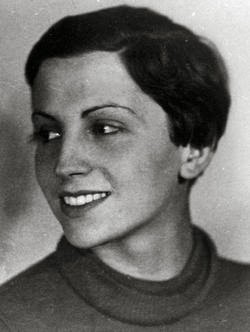
GERDA TARO and ROBERT CAPA


Gerda Taro and Robert Capa: love in a time of war
Capa and Taro lived, loved and died on the frontline, becoming the most famous war photographers of their time. As a new novel about them is published, we explore their real relationship.
 

Gerda Taro and and Robert Capa: reinvented themselves and war photography. Photograph: Fred Stein Archive/Getty Images
It begins with a photograph. In 1934 a struggling Hungarian photographer, André Friedmann, living in exile in Paris, is commissioned to take publicity pictures for a Swiss life insurance company's advertising brochure. On the lookout for potential models, he approaches a young Swiss refugee, Ruth Cerf, in a café on the Left Bank and convinces her to pose for him in a Montparnasse park.
Because she does not entirely trust the scruffy young charmer, Ruth brings along her friend Gerta Pohorylle, a petite redhead with a winning smile and a confident manner. So begins the most iconic relationship in the history of photography, and an intertwined and complex story of radical politics, bohemianism and bravery that, in the intervening years, has taken on the shadings of a modern myth.
Together, André Friedmann and Gerta Pohorylle would change their names and their destiny, becoming Robert Capa and Gerda Taro, the most celebrated visual chroniclers of the Spanish civil war. Together, too, they would change the nature of war photography, reinventing the form in a way that resonates to this day. Capa went on to become the most famous of the two, and arguably the most famous war photographer of the 20th century due to his visceral images of the D-day landings on Omaha Beach in Normandy. His most famous quote would become a dictum by which ensuing generations of war photographers worked: "If your pictures aren't good enough, you're not close enough."


This brave, but cavalier, approach to getting pictures of the action from within the action would cost both Gerda Taro and Robert Capa their lives – the former killed on the frontline of the Spanish civil war in 1937; the latter blown up by a land mine in Indochina in 1954. The myth of Robert Capa and Gerda Taro continues apace today with the British publication of a novel called Waiting for Robert Capa by Susana Fortes, a Spanish novelist and teacher.


When the book is mention to Jimmy Fox – veteran photographic historian and erstwhile director of the famous Magnum agency, which Capa co-founded with Henri Cartier-Bresson – he says: "I was dismayed by the novel. It was so fluttery and sugary. I think it is wrong to elevate the romance in that way. Capa was a flamboyant guy, a great drinker and a womaniser who had so many lovers, including Ingrid Bergman. Taro found the love of her life in Ted Allan, the man who was with her when she was fatally wounded. But of course that does not fit the big simplified romantic version so neatly."
The independent filmmaker Trisha Ziff, who directed The Mexican Suitcase (2010) about the discovery of a hoard of unseen negatives by Capa, Taro and David "Chim" Seymour, concurs. "Waiting for Robert Capa is a fiction based on a romance, but it is also a romance based on a fiction. If it becomes a Hollywood film, the myth will no doubt take over."


If there is one thing all the experts agree on, it is that nothing was straightforward about Robert Capa and Gerda Taro's relationship. Shortly after their first meeting, the young André Friedmann was sent to Spain on an assignment for a Berlin-based photo magazine. He subsequently photographed the Holy Week procession in Seville and described the festivities to Gerta Pohorylle in a letter that also mentioned how much he was thinking about her. On his return, he spent the summer holidaying in the south of France with Gerta and her friends. According to Ruth Cerf, quoted in Alex Kershaw's book Blood and Champagne: The Life and Times of Robert Capa, the pair "fell in love in the south of France" despite her suspicion that he was "a rogue and a womaniser". If the young Gerta was fascinated by his waywardness, he in turn was taken by her independent spirit. "Here was a woman," writes Kershaw, "who didn't suffocate him with affection, and who was as unashamed by her sexuality as she was conscious of her outsider status in Paris as a German Jew." This gets to the heart of the couple's mutual attraction: their shared radicalism and acute sense of exile. Friedmann had departed his native Hungary for Berlin in 1931 soon after his arrest by the secret police for leftist student activism. In February 1933, aged 19, he had fled Berlin when Hitler assumed power, travelling to Vienna, then back home to Budapest, before departing Hungary for good in September to live in penury in Paris, where he met Pohorylle on that fateful day in 1934.


By then, she too had experienced radical politics, arrest and flight. Born to bourgeois parents in Stuttgart in 1910, Pohorylle joined a young communist organisation and, around the time Friedmann was fleeing Berlin, was distributing anti-Nazi leaflets and putting up communist propaganda posters on walls under cover of darkness. She was arrested by the Nazis on 19 March 1933 and interrogated about a supposed Bolshevik plot to overthrow Hitler.
On her release, she used a fake passport to travel overland to Paris, where she was looked after by a communist network. Both André Friedmann and Gerta Pohorylle, though still young, were already seasoned activists and exiles when they met, intent on forging new lives for themselves while also staying loyal to their radical leftist roots.
Though Friedmann could seldom afford to buy film and often had to pawn his camera to survive in Paris, he schooled Pohorylle in the rudiments of photography and found her a job in the newly formed Alliance Photo picture agency. And she, it seemed, anchored him – at least for a while. "Without Gerta, André would not have made it," the late Eva Besnyö, another Hungarian photographer who mixed in the same bohemian circles in Berlin, told Kershaw. "She picked him up, gave him direction. He had never wanted an ordinary life, and so when things didn't go well, he drank and gambled. He was in a bad way when they met, and maybe without her it would have been the end for him."


As Friedmann's photographic career tentatively took off in Paris, his younger brother Cornell joined him, developing the photographs taken by André as well as those of his friends, Henri Cartier-Bresson and David "Chim" Seymour, in a darkened bathroom in a hotel that overlooked the famous Café du Dôme. It was there that the three photographers mingled with philosophers, writers and artists, drinking and dreaming of better times. It was around this time also that André Friedmann and Gerta Pohorylle became Robert Capa and Gerda Taro in a shared act of self-reinvention that still seems daring today.
The first anyone else heard of Robert Capa was when the couple turned up at the offices of Alliance Photo and announced they had discovered a famous American photographer of that name. The pair soon found they could sell photographs attributed to the fictitious Capa to French photographic agencies for three times the price of Friedmann's, such was the status accorded visiting American photographers. Their joint ruse was soon discovered, but the pseudonyms remained in place. In her essay for the exhibition catalogue Gerda Taro: Archive, published in 2007, Irme Schaber notes: "Taro and Capa were not merely reacting to their precarious economic situation. They were responding as well to the antisemitism of Germany and the increasing antipathy towards foreigners in France. And to elude the stigma attached to being refugees, they spurned every ethnic or religious label."


If their joint self-reinvention was the first significant factor in the dramatic trajectory of Robert Capa and Gerda Taro, the second was their decision to go together to Spain in 1936 to cover the republican resistance to Franco's fascist rebels. Like many writers and artists, including George Orwell and André Malraux, they went there out of political conviction and scorned any notion of journalistic detachment. The fight against fascism was, in a very real and personal way, their fight, given their history as exiles and refugees, and the Spanish civil war was the literal and metaphorical frontline of that battle.
It was an adventure, though, that almost ended as soon as it had begun, when the plane hired by the French magazine Vu to take them to Barcelona crash-landed in a field on the outskirts of the city. The pair limped into Barcelona to find scenes of ferment and disorder as anarchist forces took over the city. There, they photographed young republicans leaving Barcelona for the frontlines. Then in September they travelled together to the front themselves, arriving in the village of Cerro Muriano near Córdoba, where they found, and photographed, crowds of villagers fleeing their homes as the fascists rained shells down on the village. In one famous series of pictures, Capa captured Taro crouched, camera in hand, behind a wall beside a republican soldier. In another even more famous picture, perhaps the most well-known war photograph ever, Capa caught a militiaman at the very moment of his death from a sniper's bullet.
In that split second, the legend of Robert Capa, war photographer, was born, and decades later that same image would become the centre of a debate that still simmers over the ethics and veracity of war photography. In Waiting for Robert Capa, Fortes writes: "Death of a Loyalist Militiaman contained all the drama of Goya's Third of May 1808 painting, all the rage that Guernica would later show… Its strength, like all symbols, didn't lie in just the image, but in what it was representing." Fortes also imagines Taro gently probing Capa for the story of what really happened that day, and him replying: "We were just fooling around, that's all. Perhaps I complained that everything was far too calm and that there wasn't anything interesting to photograph. Then some of the men started to run down the slope and I joined in as well. We went up and down the hill several times. We were all feeling good. Laughing. They shot in the air. I took several photographs…"


Though the context of the photograph is still contested, the imagined conversation does describe what probably happened that day just before a Francoist sniper returned fire from across the hills, killing the militiaman who was running down the hill for Capa's camera. "People want the truth from war photography more than they do from any other kind of photography," says Jimmy Fox, the Magnum picture editor who has worked with the likes of Don McCullin and Philip Jones Griffiths, "but a flat surface of an image is not the reality and never can be."
In Spain, Capa soon developed a reputation for taking photographs whatever the risk, setting the tone for war reportage as we now know it. Taro, too, was often seen running across the battle lines with her camera, her bravery matched by her recklessness. She travelled back and forth to the frontlines, shooting what she saw, often driven by a mixture of humanity, political commitment and a shrewd understanding of the power of the photograph to shape public opinion.
Throughout 1937, Taro visited several frontlines, either with Capa or on her own. They managed to return to Paris for a short vacation in July that year, celebrating Bastille Day by dancing in the streets below Sacre Coeur and, according to Schaber, hatching "great plans for the future". Taro then returned to Spain alone, despite the growing concerns of her friends who, having seen her recent photographs of the fighting, feared for her safety.


Defying a ban on journalists travelling to the front, she once again made her way to Brunete with the Canadian journalist Ted Allan, her close friend, travelling companion and soon-to-be lover. According to Allan's diaries, written later, they spent "mornings afternoons and evenings together chasing stories... For three or four weeks we were constant companions. And finally, one afternoon, we ended up in her hotel room." She told Allan: "Capa is my friend, my copain," and said she might be travelling to China with him. "Nothing was settled," wrote Allan. "Everything was possible."
On Sunday 25July, the pair found themselves trapped in a foxhole near Brunete as bombs fell around them relentlessly. Taro kept on photographing, often holding her camera high above her head to capture the carnage. Allan protected her with a film camera as shrapnel and rocks fell around them. Then, as republican troops began pulling out of the area, Taro and Allan ran out of the foxhole and hitched a ride on the running board of a car while the planes continued to strafe the retreating convoy. In the chaos, the car was then rammed by an out-of-control republican tank and the couple were thrown into the dirt. Transported to a nearby field hospital, Taro died from her injuries in the early hours of the following morning. She was 26. The injured Allan did not get to see her again. According to Irene Golden, the nurse who was on duty, her last words were: "Did they take care of my camera?"


Gerda Taro's funeral in Paris was attended by tens of thousands of mourners, including Capa, Chim and Ted Allan. Orchestrated by the French communist party, which claimed her as one of its own, it became, as Schaber puts it, "a spectacular manifestation of international solidarity with the Spanish republic". In death, Gerda Taro became a hero. Robert Capa went on to become the most celebrated and mythologised war photographer of the century until he, too, died in action in Indochina in 1954 at the age of 40. "He never talked about her," says the photographer Ata Kandó in The Mexican Suitcase.
Gerda Taro has now fully emerged from the shadow of Capa as an important photographer in her own right. Many photographs attributed to him – they initially shared the byline CAPA – have now been identified as hers. "She was a pioneering woman both as a photographer and a political activist," says Ziff. "She was very liberated for her time, putting her work before any more traditional female role. She had reinvented herself – but the Capa myth was so strong that, even when she died, some newspapers described her as Robert Capa's wife. Their lives were entwined, but she was very much her own woman, and he knew that. They both believed that their photographs could change the world and change the way people think. And their photographs did."


For details of The Mexican Suitcase, go to themexicansuitcase.com. Robert Capa: The Paris Years 1933-54 by Bernard Lebrun, featuring pictures by the photographer, is published by Abrams, £24.99; and Waiting for Robert Capa by Susana Fortes is published by HarperPress